

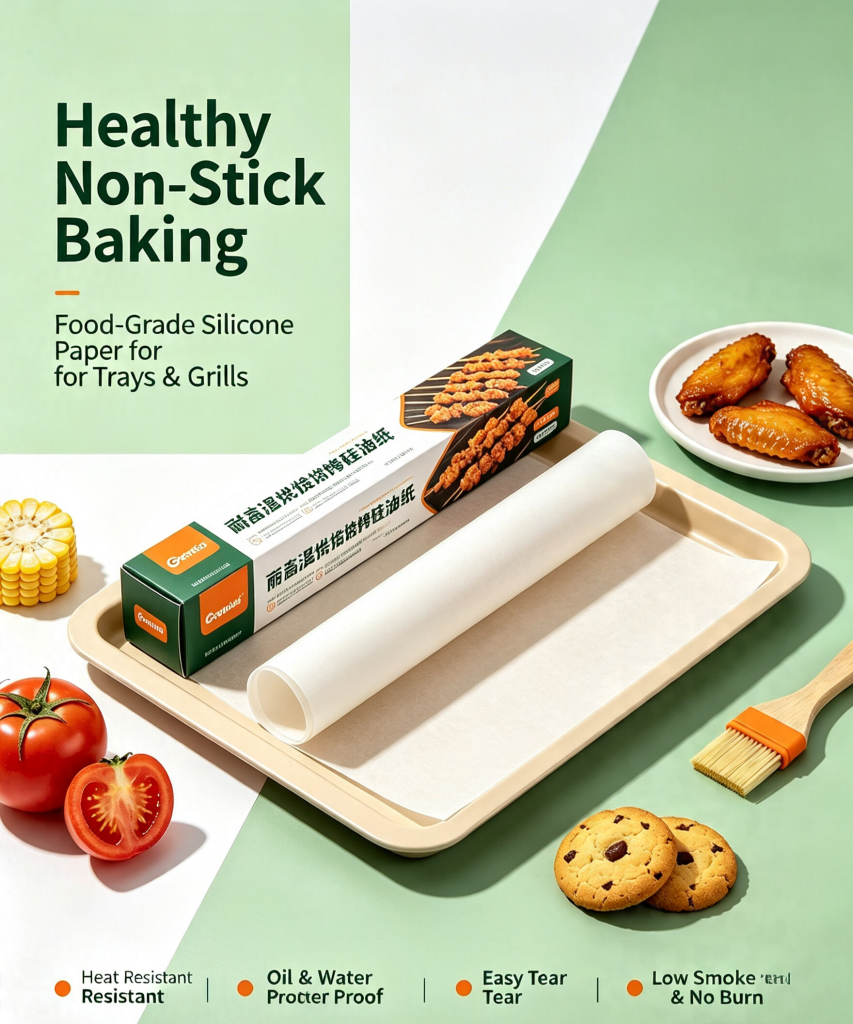
Silicone oil paper, an unassuming yet indispensable supply, is widely applied in kitchen baking, daily storage and industrial manufacturing. Boasting core properties including waterproofing, oil resistance, non-stick surface and high-temperature tolerance, it breaks the limits of single-scenario use. Affordable and highly functional, it serves countless purposes from domestic life to commercial industries. Most people only associate silicone oil paper with baking cakes, unaware it can facilitate nearly every aspect of daily life. Today we will walk you through its wide-ranging applications.
I. Core Advantages: The Functional Merits of Silicone Oil Paper
Also known as greaseproof paper or release liner, silicone oil paper is a functional paper made with premium wood pulp base paper coated with food-grade silicone oil on one or both sides. Unlike ordinary greaseproof paper and aluminum foil, its unique properties suit diverse scenarios:
High temperature resistance: It withstands temperatures ranging from -60°C to 230°C, compatible with ovens, air fryers and steamers.
Superior non-stick performance: The silicone coating repels sticky substances, preventing food, glue and resin from adhering to surfaces.
Water and oil barrier: Its dense coating blocks liquid penetration, resisting leakage and tearing.
Non-toxic and safe: Food-grade formulation allows direct contact with ingredients, delivering hygienic, odor-free performance.
II. Domestic Applications: An All-Rounder for Kitchen and Daily Use
- Baking & Cooking – The Ultimate Tool for Easy Cookware Cleanup
This is silicone oil paper’s most well-known application, a staple for baking enthusiasts. When baking cookies, bread, biscuits and egg tarts, line baking trays with it to eliminate food sticking entirely. Trays stay residue-free after baking with minimal scrubbing required. For chiffon and old-fashioned cakes, wrap mold interiors with the paper to achieve smooth, hassle-free demolding, leaving intact, crumb-free cake surfaces.
It also accommodates various cooking methods:
Line air fryer baskets to trap grease and stop food from burning or sticking to the mesh;
Line steamers when steaming buns, mantou and pastries as a substitute for traditional steamer cloths – it repels dough, maintains air circulation and prevents sogginess caused by condensed water;
Lay it under grilled or pan-fried food to cut oil consumption for low-fat healthy cooking while simplifying post-meal cleaning.
- Food Storage – A Freshness & Stain Protection Must-Have
Silicone oil paper solves two common storage headaches: greasy adhesion and cross-contaminated flavors. When freezing steak, dumplings, tangyuan and other meats, place a sheet between each layer to stop frozen portions from clumping together. Ingredients stay intact and can be separated without full thawing. Wrapping cooked marinated dishes and fried food in silicone oil paper blocks excess grease, keeping storage containers and plates stain-free. It also reduces air exposure to mildly lock in freshness and prevent flavor mixing.
- Household Cleaning & Handcraft Hacks
Silicone oil paper has lesser-known yet handy domestic uses. After using ovens or microwaves, line the bottom with a sheet to catch spilled grease and food scraps. Simply replace it regularly instead of scrubbing the appliance interior repeatedly. When crafting with clay, plasticine, epoxy resin or gypsum, lay silicone oil paper on worktables to avoid sticky material residue. Cured crafts peel off effortlessly without leaving marks on surfaces.
III. Commercial Catering: A Hygienic, Efficient Industry Necessity
- Food Presentation & Takeaway Packaging
Restaurants, dessert shops and cafés rely heavily on silicone oil paper to elevate service quality. Western meals, light bites and grilled dishes are served atop the paper to soak up excess grease, enhance plating aesthetics and prevent tableware stains. Bakeries wrap bread, cakes and cream puffs with silicone oil paper liners during packaging. Its oil-proof, non-stick surface stops pastries from deforming or sticking to bags, greatly improving customer experience.
- Cooked Food Processing & Portioning
Mass producers of deli meats, braised food and pastries use silicone oil paper in bulk. During large-scale baking, marinating and pickling, it separates ingredients from production equipment to streamline mass demolding and portioning, boosting overall productivity. Its food-grade composition meets strict sanitation standards, preventing secondary food contamination and safeguarding food safety.
IV. Industrial & Handicraft Sectors: Professional-Grade Release Material
Beyond daily consumer use, silicone oil paper is an essential functional industrial material valued for release, separation and surface protection capabilities:
Adhesive industry: Acts as release liner for tapes, stickers and self-adhesive labels, enabling clean peeling while preserving adhesive stickiness;
Composite material, resin and fiberglass manufacturing: Functions as mold release paper to avoid product adhesion and ensure smooth, flawless finished surfaces.
Additionally, electronics, leather and automotive interior industries use it to isolate sticky auxiliary materials and shield product surfaces, resolving issues such as sticking, surface scratches and dust accumulation during production and storage, with outstanding cost performance.
V. Tips for Using Silicone Oil Paper to Extend Service Life & Avoid Risks
Distinguish material grades: Only food-grade silicone oil paper may touch ingredients. Industrial variants coated with non-edible silicone are strictly forbidden for cooking or food storage.
Follow temperature limits: Standard food-grade silicone oil paper has a maximum heat resistance of 230°C. Avoid prolonged baking above 200°C to prevent carbonization and harmful substance release.
Never heat empty sheets: Always cover silicone oil paper with food when placing it in ovens or air fryers. Heating bare paper alone may cause curling or fire hazards.
Select sizes as needed: Pre-cut square or round sheets suit home use, while large roll formats cater to commercial and industrial mass operations.
Conclusion
The humble silicone oil paper integrates household life, catering services and industrial manufacturing thanks to its non-stick, heat-resistant, safe and hygienic properties. It is not only a convenient household supply that accelerates cooking and cuts cleaning labor, but also a cost-effective consumable that boosts efficiency across all industries. Choosing and using silicone oil paper properly delivers tidier, more convenient daily routines and more standardized, productive manufacturing workflows.