

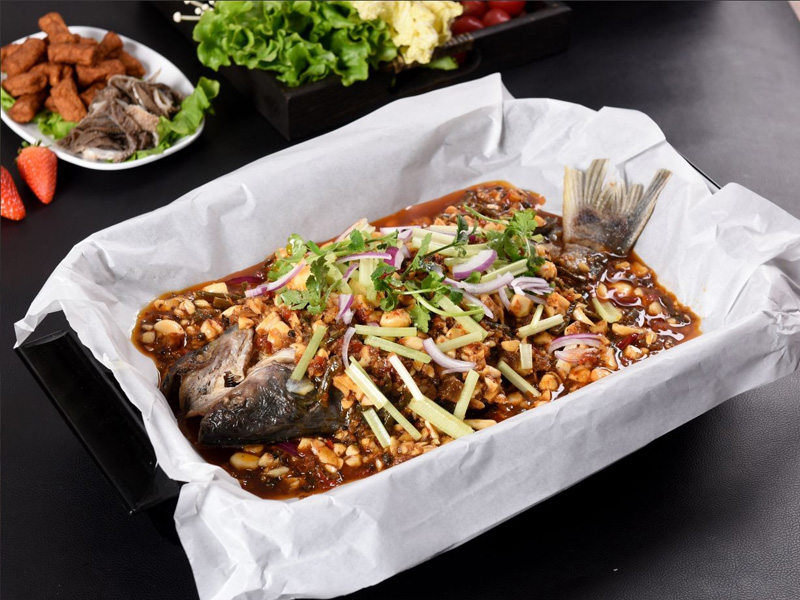
Points to Note When Purchasing Baking Paper for Grilled Fish Trays
When purchasing grilled fish tray paper (silicone baking paper), purchasing considerations revolve around food safety, heat resistance, oil and water resistance, size compatibility and usage cost, given the characteristics of grilled fish cooking: high-temperature baking, large amounts of grease and soup stock, direct food contact in most cases, and some restaurants even use the paper for table serving.
1. Food Safety (Top Priority)
- Must use food-grade silicone baking paper Look for marking: For Food Contact. Avoid industrial paper. Prioritize products complying with Chinese national standard GB 4806.8 (Paper and paperboard materials and articles for food contact). ❌ Warning: Low-priced unmarked paper may have unqualified silicone coating, which tends to migrate and release peculiar smells under high temperature.
- Distinguish single-sided silicone paper vs double-sided silicone paper
- Grilled fish involves plenty of soup and grease: double-sided silicone paper is recommended for stronger oil and water resistance to prevent penetration.
- Liquid easily seeps through the reverse side of single-sided silicone paper and sticks to trays.
- Ordinary baking paper cannot replace silicone paper for grilled fish with rich soup Thin regular baking paper has poor water resistance and easily breaks after soaking in fish soup.
2. High Temperature Resistance (Core indicator to avoid smoking, breakage and paper residue)
- Confirm temperature resistance: Typical grill oven temperature for grilled fish ranges from 180℃ to 230℃ ✅ Preferred specification: Heat resistant above 230℃, short-term tolerance up to 250℃ ⚠️ Note: Do not expose paper to temperatures exceeding the labeled limit for long periods; otherwise it will turn yellow, become brittle and produce peculiar odors.
- Check production process: Fully cured silicone shall not emit pungent oily smoke under high temperature. Conduct an empty oven high-temperature test on samples; reject products with strange odors directly.
3. Grammage, stiffness and penetration resistance
- Grammage reference:
- 35–40g thin type: Suitable for short-time oven grilled fish with little soup.
- 45~60g recommended: Specially for commercial grilled fish, featuring better load-bearing and penetration resistance, not easy to break after soaking.
- Sample test: Pour hot oil and soup on the paper and let it stand, observe oil/water penetration and softening/breakage of paper.
4. Size and shape selection
- Measure the length and width of your grilled fish trays in advance:
- Choose pre-cut rectangular/sheet paper;
- Or buy large rolls for on-site cutting (more cost-effective for bulk orders).
- Leave a 3–5cm margin around the paper to wrap the fish and stop soup overflow.
- For charcoal grilled fish with open flame: Prevent direct contact between silicone paper and open flame as it catches fire easily.
5. Practical performance test with samples
- Non-stick performance: Fish meat and sauce do not stick easily for complete fish removal.
- Check powder shedding: Wipe dry and wet surfaces; no white powder should fall off.
- Wet strength: Paper remains intact after soaking in fish soup for a long time. Avoid overly bright white paper with sharp pungent smell, which may contain fluorescent agents and substandard additives.
6. Commercial cost, packaging and storage
- Compare quotations by complete specifications. Watch out for vendors using heavy paper cores for false weight marking.
- Storage requirement: Keep silicone paper dry; damp paper loses oil resistance. Avoid prolonged direct sunlight.
- Confirm minimum order quantity and delivery lead time; secure stable supply for long-term procurement.
7. Common Misconceptions
- Thicker means better quality. Excessively thick paper reduces air permeability, making it hard to drain soup at the fish bottom. 45–55g is the optimal range for grilled fish.
- All baking paper can be used over open fire: Silicone paper cannot touch open flame directly; only suitable for ovens and electric grills. Barbecue over charcoal requires flame isolation.
- Low-cost generic products: Many cheap varieties have poor silicone coating; silicone may peel off after high-temperature soaking, creating food safety risks.
Standard Acceptance Process for Purchase
Request samples → Check food contact qualification documents → High-temperature empty baking odor test → Soup penetration resistance test → Actual grilled fish trial; confirm no sticking, breakage or heavy smoke before bulk order.